
Better Merch
Longevity Is the Most Underrated Sustainability Lever
We spend a lot of time asking what products are made from. Maybe we should also be asking how long they're going to stick around.
Sustainability conversations love materials. Recycled plastic. Bamboo. Organic cotton. Recycled stainless steel. FSC-certified paper.
We ask what something is made from before we've even decided whether it's any good.
But there's another question that doesn't get nearly enough attention: how long is this thing actually going to last?
Because a product that looks impressive on day one but gives up on day 31 has a very different story from something that stays useful for years.
Welcome to the less glamorous — but extremely important — world of product longevity.
Sustainability has a time dimension
We tend to describe products as snapshots. What's it made from? Where was it made? Does it contain recycled content? Does it have a certification? What's its carbon footprint?
All useful questions. But products don't exist for one moment. They're manufactured, transported, used, washed, dropped, carried, scratched, forgotten, rediscovered and eventually replaced.
Which means there's another useful question: how long does the product remain useful?
Sustainability has a time dimension.
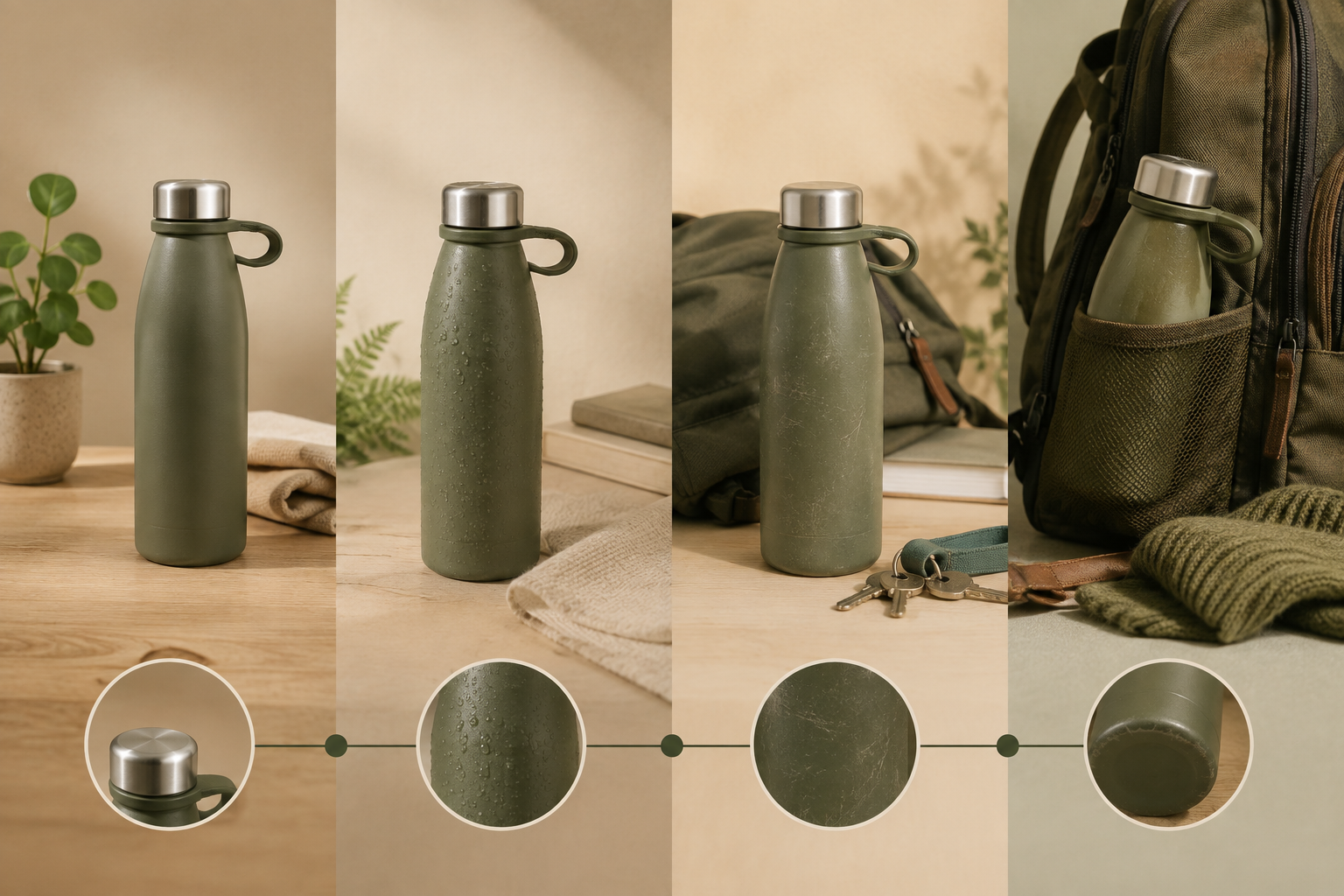
A conceptual product life — illustrative only
Day 1
Unboxed, branded and heading out the door.
Month 6
The novelty has worn off. Is it still being used?
Year 1
A few marks, a few stories, still doing its job.
Still in use
The quiet win nobody puts on a badge.
A conceptual illustration of how a product's usefulness can play out over time. Not a lifespan claim about any specific product.
Wait... what does that mean?
Product longevity
The length of time a product remains functional and useful for its intended purpose. Longevity can be influenced by its materials, construction, design, quality, maintenance, repairability and how the product is actually used.
Explore SustainabilityThe replacement question
Imagine two promotional products designed to perform the same job. One lasts a relatively short time before needing replacement. The other stays functional and useful considerably longer.
That difference matters. Every replacement potentially means another product needs to be manufactured, packaged, transported and eventually dealt with at the end of its useful life.
This doesn't mean we can automatically declare the longer-lasting product environmentally superior without considering the wider lifecycle. But it does mean replacement frequency deserves a place in the conversation.
And strangely, we don't talk about it nearly enough.
Cheap can become expensive surprisingly quickly
Here's a scenario most of us recognise. Product A costs $5. Product B costs $8. Easy decision? Product A wins.
Except Product A needs replacing three times during the period Product B remains in use. Suddenly the calculation looks rather different.
Two different questions
Unit price
What does it cost today?
Useful life
How long does it keep doing its job?
Illustrative comparison only. Cost per unit tells us what something costs to buy. It doesn't necessarily tell us what it costs to keep doing the job.
Quick myth buster
"The product made from the most recycled material is automatically the most sustainable choice."
Recycled content tells us something useful about the material input. It doesn't automatically tell us how durable, useful or long-lasting the finished product will be. Material choice and product longevity are different pieces of a much bigger picture.
Read: What Recycled Content Claims Actually MeanBuilt to last beats built to impress
Promotional merchandise has an unusual challenge. It needs to make an impression. But ideally, that impression should last longer than the event where it was handed out.
Consider a few everyday examples. A bottle that becomes somebody's daily bottle. A backpack that survives years of commuting. An umbrella that makes it through more than one Auckland downpour. A charging cable that still works after being thrown into a laptop bag 400 times. A notebook that doesn't lose its pages halfway through a meeting.
None of these things sound particularly revolutionary. That's exactly the point.
Sometimes sustainability thinking isn't about inventing an extraordinary new product. It's about making ordinary products better at staying useful.
Durability and longevity aren't exactly the same thing
They overlap, but there's a useful distinction.
A useful distinction
Durability
A product's ability to withstand wear, damage or repeated use.
Longevity
The bigger picture: how long the product actually remains useful.
A product could be physically durable but become obsolete or unwanted quickly. Another might require some care or maintenance but remain useful for many years.
So longevity isn't only about making something indestructible. It's about designing and choosing products that can remain relevant and functional over time.
Repairability changes the conversation
Here's a question we rarely ask about promotional merchandise: can it be fixed?
Not every promotional product needs to be repairable. Nobody is opening a repair café for a promotional pencil. But as products become more substantial, repairability becomes more interesting.
Can a component be replaced? Can a battery be serviced? Can a strap be repaired? Can a lid be replaced instead of the entire bottle? Can a spare part extend the product's life?
The ability to replace one failed component rather than the entire product can help keep useful products in service for longer. Whether that's possible depends on the product, and on the information available for it.
Sometimes the smallest part kills the whole product
This is worth thinking about.
The stainless-steel bottle body might last for years. But what happens if the lid breaks? The backpack fabric might still be perfect. But what happens when the zip fails? The electronic device might still function. But what happens when the battery no longer holds charge?
Product longevity isn't necessarily determined by the strongest material. Sometimes it's determined by the weakest replaceable — or non-replaceable — component.
That's why construction matters as much as the headline material.
Longevity starts before the order is placed
Here's the useful part for resellers. You don't have to manufacture the product to start thinking about longevity. Product selection itself can make a difference.
Five questions before you order
- 1
Is this appropriate for the intended use?
A lightweight product might be perfectly suitable for occasional use but a poor choice for something expected to work every day.
- 2
Is the construction appropriate?
Look beyond the material headline and consider the actual product.
- 3
Are replaceable components available?
Where relevant, replacement lids, parts or other components can help extend useful life.
- 4
Will the recipient actually want to keep it?
Physical durability doesn't help much if nobody wants the product.
- 5
Will the branding age well?
Yes — branding matters here too.
Your logo has a lifespan too
Imagine a beautifully made product designed to last for years. Now put a giant campaign slogan across the front: SUPER AWESOME SALES CONFERENCE 2026!!!
Suddenly its useful emotional lifespan might be considerably shorter.
The life of the product doesn't end when the campaign does.
Branding can influence longevity. Timeless, considered branding may make an item easier to continue using after the original event or campaign has passed.
That doesn't mean every logo needs to be tiny. It means branding should consider the life of the product after the campaign. That's a very different design brief.
The "Will I still use this?" test
Before choosing a product, imagine receiving it yourself.
Three thought prompts — not guaranteed lifespans
- 1
Would I use this next week?
Probably easy.
- 2
Would I use it in six months?
More interesting.
- 3
Would I still be happy carrying it in two years?
Now we're getting somewhere.
Of course not every product is intended to last for years. But asking the question forces us to think beyond the handover moment.
Longevity doesn't give us permission to make giant claims
Important disclaimer time.
A product lasting longer doesn't automatically make it sustainable, carbon neutral, low impact, better for the planet, or any other enormous environmental claim. We would need much more information to make conclusions like those.
What longevity does give us is another useful factor to consider alongside materials, recycled content, manufacturing, certifications, transport, packaging, product usefulness, end-of-life options, and carbon information where available.
Sustainability is rarely one lever. Longevity is simply one we've been underusing.
What about carbon?
This is where longevity gets especially interesting.
Product carbon footprints are generally expressed for a defined product or functional basis and lifecycle scope. But a buyer may also care about how often products need to be replaced to perform a particular function over time.
Comparing those scenarios properly requires suitable lifecycle information and consistent assumptions. So we shouldn't simply divide a product's carbon number by the number of years we hope somebody keeps it and declare victory.
Useful question? Yes. Simple calculation? Not necessarily.
This is why transparency around methodology and assumptions matters when discussing product carbon information.
Better merchandise sometimes means buying less often
Here's the idea that deserves much more attention.
We tend to think better purchasing means finding a different material. Sometimes it might. But sometimes the bigger opportunity is buying something that doesn't need replacing as quickly.
That could mean choosing better construction. Choosing a more appropriate product. Choosing something repairable. Choosing something timeless. Or simply choosing something people value enough to look after.
That's not as exciting as discovering a new miracle material. But it might be considerably more practical.
The takeaway
The next time you're comparing promotional products, don't only ask what it's made from. Ask how long it's designed to remain useful. Will it cope with the intended use? Can anything be replaced or repaired? Will the recipient still want it later? Will the branding age well?
Materials matter. Certifications matter. Carbon information can matter. But so does time.
Because one of the most overlooked characteristics of a good product might simply be:
You don't need another one yet.
Want to dig a little deeper?
Material Guide
Understand more about the materials used across the Ecosource range.
Explore MaterialsProducts
Browse the Ecosource range with material, certification and carbon information.
Explore ProductsSustainability
How Ecosource approaches materials, certifications, product attributes and impact information.
Explore Sustainability