
Material Guide
Bamboo
A fast-growing plant used across a wide range of promotional merchandise.
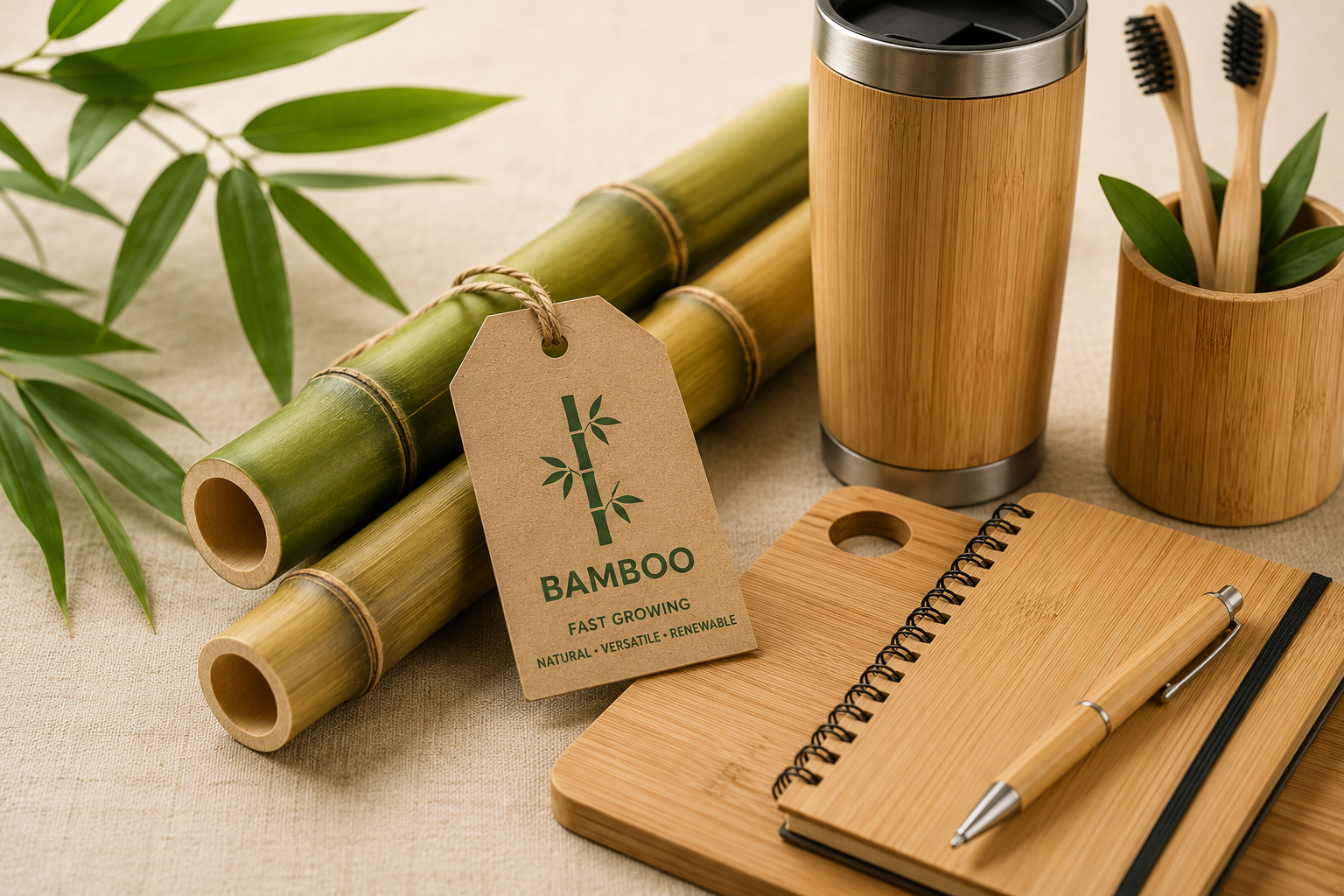
Bamboo is a naturally occurring material known for its rapid growth and distinctive appearance. Depending on the product, it may be used in a relatively natural solid form or processed into material suitable for different manufacturing applications. Across promotional merchandise, bamboo is commonly found in drinkware, stationery, homeware, technology accessories and gift products.
What is Bamboo?
Bamboo is a group of fast-growing grasses with strong, woody stems. Unlike conventional timber trees, many bamboo species can regenerate from their established root systems after harvesting.
Its growth characteristics and versatility have made bamboo a popular material for a wide range of consumer and promotional products.
However, "bamboo" can describe different types of material use. Some products use solid or laminated bamboo, while others may contain bamboo fibres or bamboo-derived components that have undergone considerably more processing.
Product-specific material information should therefore always be checked before making sustainability claims.
From plant to product
- 1
Growing
Bamboo develops quickly under suitable growing conditions and can form mature stems much faster than many conventional timber species.
- 2
Harvesting
Mature bamboo stems can be harvested while the established plant and root system remain in place.
- 3
Regrowth
New shoots can continue growing from the existing underground root system.
- 4
Processing
Bamboo can be cut, shaped, laminated or processed into different forms depending on the intended product.
- 5
New products
The finished material can be used in drinkware, stationery, kitchenware, desk accessories, technology products and gifts.
Where you'll find Bamboo
Bamboo is a versatile material and appears across many promotional merchandise categories.
Drinkware
Used for selected lids, outer surfaces, handles, bases and other components.
Office & stationery
Found in notebooks, pens, desk accessories, rulers and organisers.
Home & gifting
Used in serving boards, kitchen accessories, storage products and gift sets.
Technology & accessories
Bamboo may be incorporated into selected speakers, chargers, stands and other technology accessories.
Why consider Bamboo?
Bamboo's rapid growth and ability to regenerate from established root systems can make it an interesting material option when compared with some slower-growing plant resources.
It is also versatile and visually distinctive, allowing it to replace or complement conventional materials in certain applications.
However, the presence of bamboo does not automatically determine the environmental performance of the complete product.
Processing, adhesives, coatings, other materials, electronics, packaging, manufacturing and transport should also be considered.
How much of the product is Bamboo?
This distinction is particularly important.
Some products may be predominantly bamboo, while others may contain only a bamboo lid, base, handle, casing, trim or decorative component.
For example, a stainless-steel bottle with a bamboo lid should not simply be presented as a "bamboo bottle." A more accurate description would be a stainless-steel bottle with a bamboo component or bamboo lid.
Where material composition information is available, refer to the individual product specifications before making a specific claim.
A bamboo component should not automatically classify the entire product as being made from bamboo.
Certifications & Responsible Sourcing
Look beyond the material name.
Bamboo does not automatically mean that a product carries FSC®, organic or any other certification.
Where recognised certification or supporting documentation has been supplied for an individual product, Ecosource may display this information against that product.
Certification claims should only be made where they are specifically supported by the product's supplier documentation.
Bamboo and Carbon
What about carbon impact?
Bamboo being fast-growing does not by itself tell us the complete carbon footprint of a finished product.
Material processing, manufacturing, additional components, packaging, decoration, quantity, transport and final destination can all influence the overall footprint.
Where supplier-provided product carbon information is available, Ecosource displays it separately against the relevant product.
Making accurate Bamboo claims
When presenting a bamboo product to a customer, claims should be based on the actual product composition and supplier information available.
Avoid assuming that:
- the entire product is bamboo because it contains a bamboo component;
- every bamboo product carries the same certification;
- bamboo automatically makes the complete product biodegradable;
- every bamboo-derived material has undergone the same manufacturing process;
- bamboo automatically means a product is plastic-free; or
- using bamboo alone determines the overall environmental impact of the finished product.
Where available, use the product's stated composition, certifications and supporting supplier documentation.
Explore products made with Bamboo
Discover drinkware, stationery, homeware, accessories and promotional merchandise across the Ecosource range made with or containing bamboo.