Branding Guide
Screen Printing
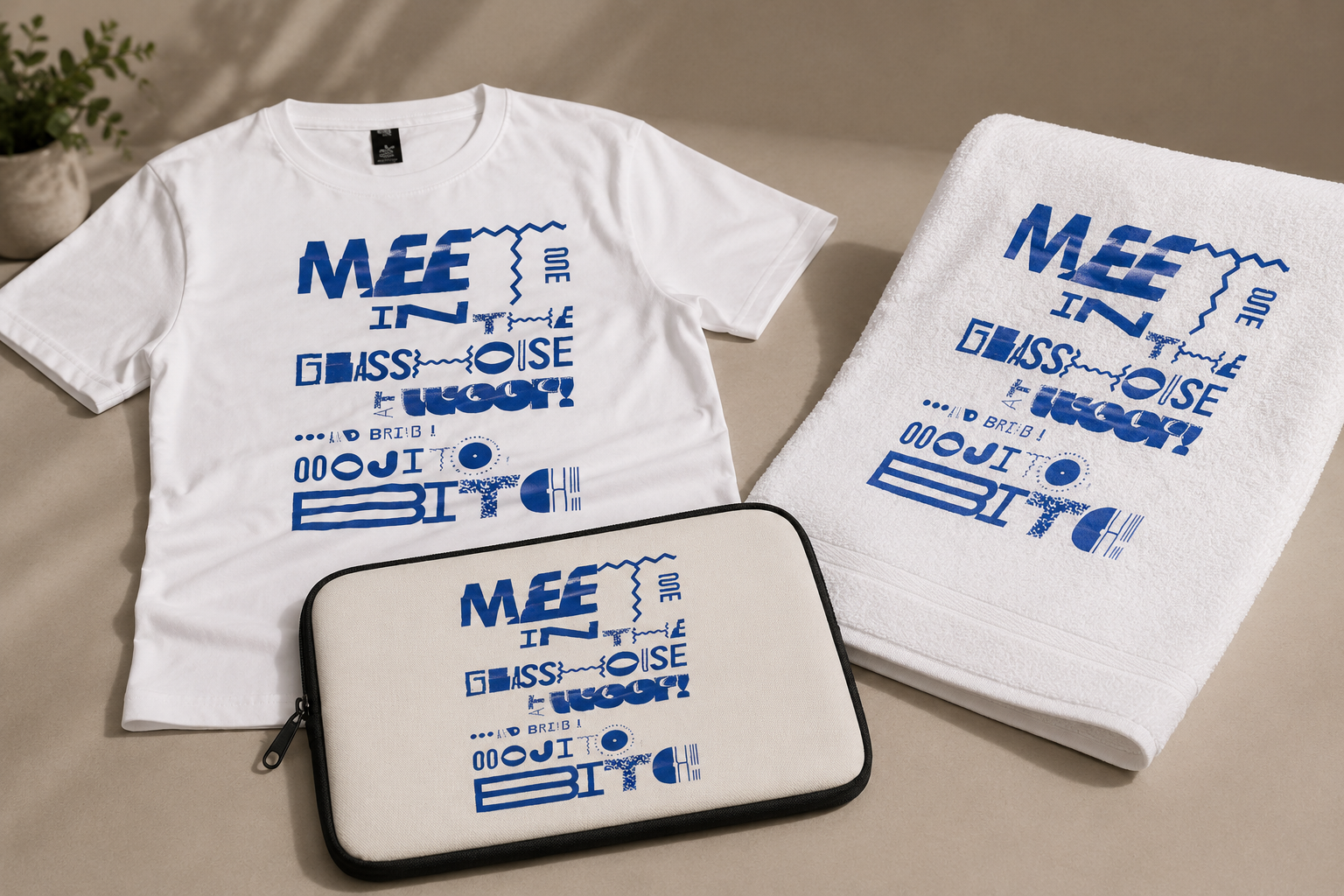
A versatile branding method known for bold, solid colours and durable results across a wide range of promotional products.
What is screen printing?
Screen printing transfers ink onto a product through a fine mesh screen. A stencil controls where the ink passes through the mesh, allowing the artwork to be reproduced on the product surface.
Each colour in the design is generally applied separately, making screen printing particularly well suited to logos, graphics and artwork using solid colours.
How screen printing works
A screen is prepared for the artwork and positioned over the branding area. Ink is then pushed across the screen with a squeegee, forcing it through the open areas of the mesh and onto the product.
For multi-colour designs, separate screens and print passes are generally required for each colour.
- 1
Artwork prepared
The design is prepared for the colours required for printing.
- 2
Screen prepared
A stencil of the artwork is created on the mesh screen.
- 3
Ink applied
Ink is pushed through the open areas of the screen using a squeegee.
- 4
Print finished
The ink is cured or dried to create the finished branding.
Best for
- Bold logos & graphics — particularly effective for artwork with strong shapes and solid areas of colour.
- Larger branding areas — a good option where a larger logo or graphic is required and the product supports it.
- Textiles & promotional products — available across bags, apparel, drinkware and many other promotional products.
- Larger quantities — once the screens have been prepared, screen printing can be an efficient choice for production runs.
Benefits
- Strong colour coverage — produces bold areas of colour with strong visual impact.
- Durable branding — provides a hard-wearing branded finish when applied to a suitable surface.
- Versatile — available across a broad range of products and materials within the Ecosource catalogue.
- Excellent for simple artwork — particularly suited to logos and graphics using solid colours.
Things to consider
- Screen printing works best with clean shapes and solid colours. Highly detailed photographic artwork, complex gradients or designs containing many colours may be better suited to a digital branding method.
- Individual colours may require separate screens and print passes, so the number of colours can affect the production process.
- The available print area and number of colours vary by product and branding position.
Screen printing variations
Screen Printing can be applied in different ways depending on the product shape and available branding area.
Standard Screen Printing
Used across many flat or straightforward branding surfaces.
Round / Rotary Screen Printing
Designed for suitable cylindrical products and can allow branding around part of the product circumference.
360° / XL Screen Printing
Available on selected products where an extended or larger branding area is supported.
Preparing artwork for screen printing
Clean, high-quality artwork produces the best screen-printing results. Vector artwork is generally preferred for logos and solid-colour designs because it can be reproduced cleanly at the required size.
Where specific brand colours are important, customers should provide the relevant Pantone/PMS references with their artwork.
Exact artwork requirements vary according to the product and branding option.
Not sure if your artwork is suitable?
Send us your artwork and we'll help determine the most appropriate branding option for your product.
Where can my logo go?
Available Screen Printing positions and maximum print areas vary by product.
Explore products available with Screen Printing
Browse promotional products in the Ecosource range that support Screen Printing.