Branding Guide
Embroidery
A premium textile branding method that uses coloured thread to stitch your logo or design directly into the product.
What is embroidery?
Embroidery creates branding by stitching coloured thread directly into a textile product.
The artwork is converted into a stitch pattern that guides the embroidery machine, building the design from thousands of individual stitches.
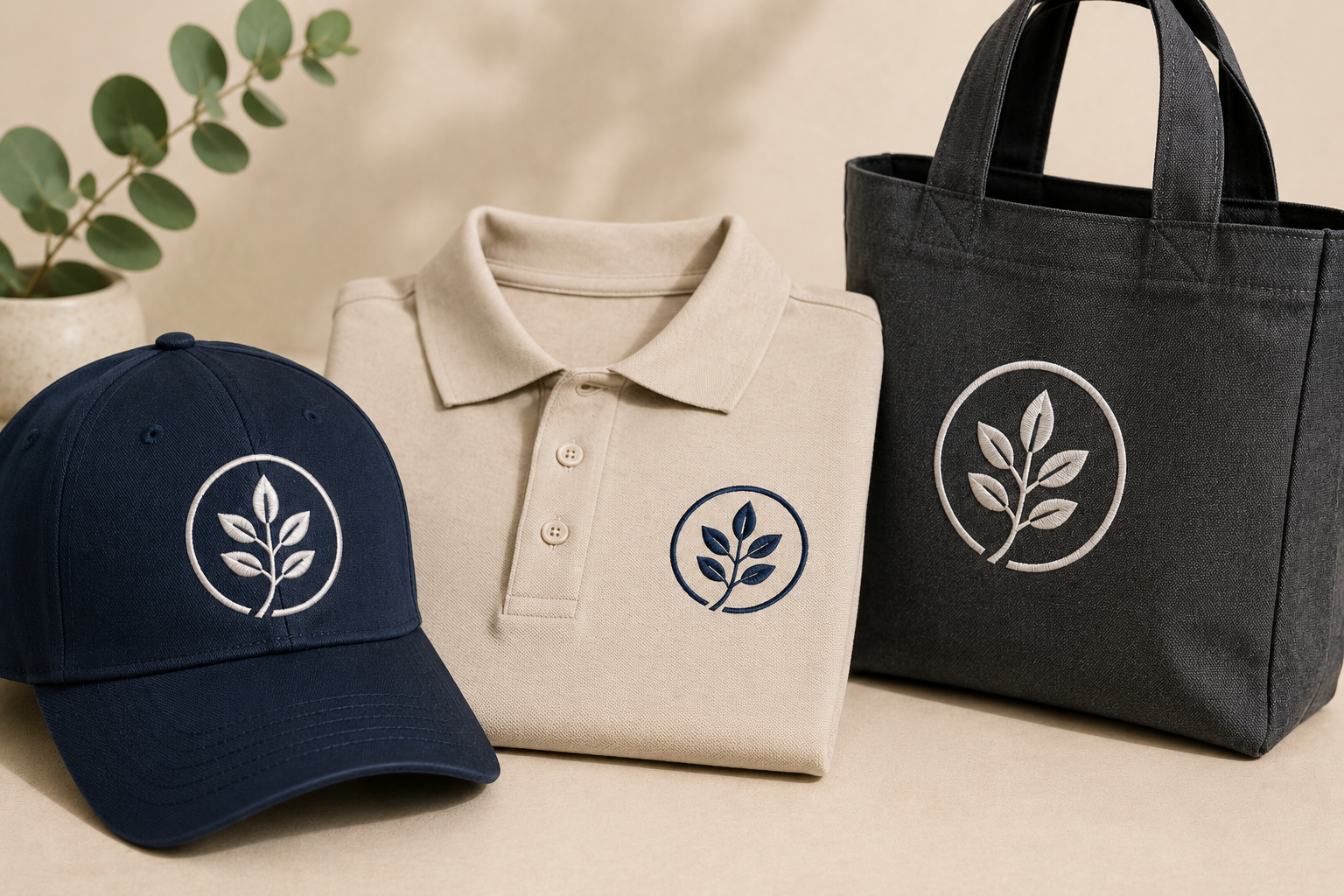
The result is a textured, dimensional finish that is particularly well suited to apparel, headwear, bags and other suitable textile products.
How embroidery works
Before production, the artwork is converted into a digital embroidery file that determines how the design will be stitched.
- 1
Artwork prepared
The logo or design is assessed and prepared for embroidery.
- 2
Design digitised
The artwork is converted into stitch instructions for the embroidery machine.
- 3
Product secured
The textile is positioned and stabilised for embroidery.
- 4
Design stitched
Coloured threads are stitched directly into the product to create the finished branding.
Best for
- Premium textile branding — Creates a professional, tactile finish particularly suited to corporate and team merchandise.
- Logos & lettering — Works particularly well with clear logos, names and uncomplicated graphic elements.
- Apparel & headwear — A strong choice for suitable polos, jackets, caps and other garments.
- Bags & textile accessories — Can provide a durable, premium finish on suitable fabric products.
Benefits
- Premium appearance — The raised thread creates a distinctive and professional finish.
- Tactile branding — Unlike a surface print, embroidery adds physical texture and dimension to the design.
- Durable — The design is stitched into the textile rather than printed onto its surface.
- Multiple thread colours — Suitable designs can incorporate several thread colours to reproduce branded artwork.
Things to consider
- Embroidery reproduces artwork using stitches rather than ink, so very fine details, tiny lettering, gradients and photographic imagery may not translate well.
- Complex artwork may need to be simplified or adapted before it can be embroidered successfully.
- The weight, construction and available branding area of the textile can also affect whether embroidery is suitable.
- The finished result will have the texture of thread, so it will look different from a flat printed logo.
- Always refer to the individual product's available branding options.
Preparing artwork for embroidery
Clear artwork with well-defined shapes and lettering generally produces the best embroidery result.
Artwork must be converted into a stitch-based embroidery file before production. Depending on the design, small details, thin lines and very small text may need to be simplified.
Thread colours are selected from the available embroidery thread range to achieve the closest practical match to your artwork. As embroidery uses coloured thread rather than printed ink, an exact Pantone/PMS match may not always be possible.
Not sure if your logo will embroider well?
Send us your artwork and we'll help determine whether Embroidery is suitable for your chosen product.
Where can my logo go?
Available Embroidery positions and maximum branding areas vary by product.
Explore products available with Embroidery
Browse promotional products in the Ecosource range that support Embroidery.